120th anniversary of the Rolls-Royce Silver Ghost
13 November 2026
Rolls-Royce Motor Cars is celebrating the 120th anniversary of the 40/50hp, the motor car that became known as the Silver Ghost and established the marque’s reputation for engineering excellence, refinement and reliability.
The model was launched at London’s Olympia Motor Show in November 1906. Its smooth-running six-cylinder engine and exceptional dependability reflected Henry Royce’s determination to overcome the mechanical limitations of early motoring with his attention given to all the car’s mechanical components and handling.
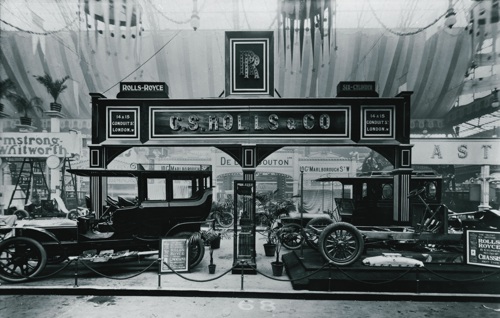
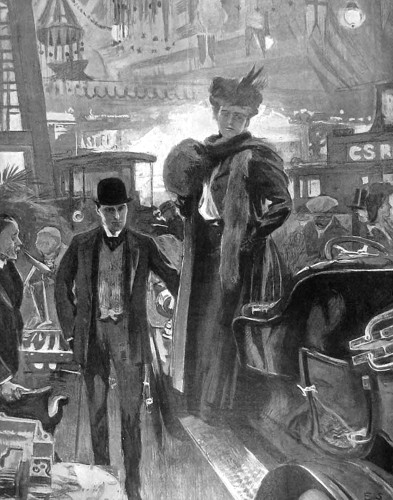
Claude Johnson, the company’s first Commercial Managing Director, universally known as CJ, recognised the importance of demonstrating these qualities publicly. He gave individual motor cars distinctive names, most famously chassis 60551, which he christened ‘The Silver Ghost’. Finished in silver paint with silver-plated fittings, this particular example became so celebrated that other owners began referring to their 40/50hp motor cars as Silver Ghosts. In time, the name came to identify all Rolls-Royces of this type.
Under CJ’s direction, the Silver Ghost undertook a succession of demanding trials and competitions. From the Scottish Reliability Trial and the celebrated London-Edinburgh run to victory in the Spanish Grand Prix and the Austrian Alpine Trial helping establish confidence in Rolls-Royce among customers making a substantial investment in a motor car.
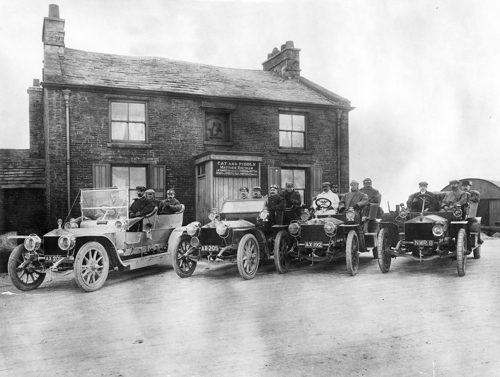
The Silver Ghost also played a part in the creation of another enduring Rolls-Royce symbol. Lord Montagu of Beaulieu’s Silver Ghost was the first motor car to carry the Spirit of Ecstasy, created by sculptor Charles Sykes and introduced as the official Rolls-Royce mascot in 1911.
Press coverage from the period reveals the esteem in which the Silver Ghost was held. This, and the testimony of owners, helped establish the Silver Ghost as ‘the best car in the world’ – a description first associated with Lord Montagu of Beaulieu that would become synonymous with Rolls-Royce itself.

The Dundee Chronicle described Rolls-Royce as “a standard of design that is in a class of its own”, while Country Life called it “The quintessence of all that a car ought to be”. The response from owners was equally emphatic. One client, having covered 30,000 miles on French roads without engine trouble, remarked in an account reproduced in Punch: “To send praise to Derby I suppose is tantamount to sending coals to Newcastle, but I should like to put on record my high appreciation of the car.”
The Silver Ghost attracted owners from across the worlds of business, politics and culture. Among them were aviation pioneer and yachtsman Tommy Sopwith; Paris Singer, one of the sewing machine magnate’s 27 children; financier Baron Alfred de Rothschild; Lord Pirrie, chairman of the renowned shipbuilding firm Harland & Wolff; composer Sir Hubert Parry; Sir Winston Churchill; and American aviator and film producer Howard Hughes.
The marque also earned the confidence of royal households. In 1911, the Government of India ordered eight landaulette-bodied Silver Ghosts for use during the celebrations associated with King George V and Queen Mary’s visit to India. Rolls-Royce provided drivers for the occasion, reflecting the confidence placed in the marque to fulfil its duties with the utmost reliability and discretion at an event of exceptional national significance.

For many owners, the Silver Ghost remains a motor car to be driven and enjoyed. In 2013, 47 Silver Ghosts retraced the 1,800-mile route of the 1913 Alpine Trial, including chassis 1701 and one of the original team cars. In 2021, chassis 1701 once again completed the London-Edinburgh journey, with its gearbox locked in top gear, just as it had 110 years earlier.
Writing in The Edwardian Rolls-Royce (Fasal & Goodman, 1994), Edward, third Lord Montagu of Beaulieu reflected on what had distinguished the Silver Ghost from other motor cars of its era. He observed that it “offered technical sophistication without appearing too adventurous”, together with an extraordinary choice of coachwork. He described it as “light in appearance without being weak, fashionable without wild excess”, concluding: “The era of the Silver Ghost has now vanished, but it was one which set standards about quality and luxury that persist to this day.”

The Silver Ghost and its place in Rolls-Royce history: The 40/50 H.P. was introduced in 1906 and remained in production until 1925. During this period, 6,173 examples were built in Britain, with a further 1,703 produced at Rolls-Royce’s American factory in Springfield, Massachusetts. Ten armoured-car chassis were also delivered in 1927. The model was renowned for its smooth-running six-cylinder engine, exceptional reliability and versatility. Its chassis could accommodate a wide variety of coachwork, from formal limousines to open touring bodies, with suspension carefully matched to the intended configuration.

One of the most celebrated examples is currently on display at the Home of Rolls-Royce at Goodwood. Chassis 1701, nicknamed ‘The Sluggard’ by CJ, successfully completed the 1911 London-Edinburgh Trial with its gearbox deliberately locked in top gear, surpassing the fuel economy and speed figures previously achieved by Napier. Later that year, it became the first Rolls-Royce to exceed 100 mph.
Chassis 1701 and the London-Edinburgh Trial: Built at Derby for the 1911 London–Edinburgh Trial, chassis 1701 was driven by Rolls-Royce experimental test driver Ernest Hives. With its gearbox locked in top gear throughout, it completed the trial at an average speed of 19.59 mph and achieved fuel consumption exceeding 24 mpg. The motor car subsequently reached 78.2 mph in a half-mile speed test. Later that year, fitted with streamlined coachwork, it achieved 101.8 mph at Brooklands, becoming the first Rolls-Royce to exceed 100 mph.

The Silver Ghost in extraordinary circumstances: Silver Ghost chassis were adapted for military use during WWI, including in armoured cars operated by T. E. Lawrence, better known as Lawrence of Arabia. He expressed his admiration for their dependability, describing them as “more valuable than rubies”. Queen Marie of Romania also used a Rolls-Royce in connection with her humanitarian work supporting wounded soldiers and military hospitals during the First World War.
The enduring appeal of the Silver Ghost: The longevity of the 40/50 H.P. reflects the engineering standards established by Henry Royce. Many examples have survived for more than a century and remain in use by their owners. A network of specialist restorers and historic motoring organisations also helps to preserve the model’s heritage.
Article based on "120 years of the Rolls-Royce Silver Ghost - an enduring symbol of excellence" Rolls-Royce Moto Cars Newsroom 26 October 2026

Subscribe for updates
Get our latest news and events straight to your inbox.